A Practical Guide to Lash Product Strategy, Inventory Risk, and Smarter Sourcing
Launching a new lash collection is exciting.
For a growing lash brand, adding new styles can create more choices for customers, strengthen the brand’s positioning, and open new sales opportunities.
But there is one common mistake that small and emerging lash brands should be careful about:
More SKUs do not automatically mean a better product strategy.
A larger product catalogue may look impressive, but every new SKU also creates additional inventory, packaging, forecasting, marketing, and replenishment requirements.
For smaller lash brands, the real question is not:
“How many products can we launch?”
It is:
“Which products are worth launching?”
From a product sourcing and manufacturing perspective, a focused product range can often be more sustainable than launching too many products at once.
What Is an SKU?
SKU stands for Stock Keeping Unit.
In the lash industry, different combinations of product characteristics can create separate SKUs.
For example, a lash brand may offer:
• Classic lashes
• Volume lashes
• Flat lashes
• YY lashes
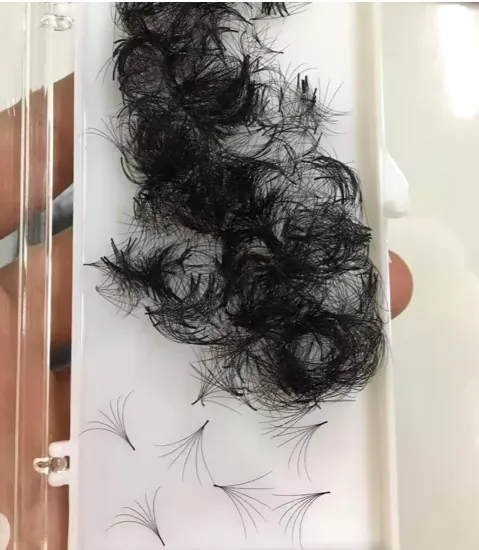
• Premade fans
• Brown lashes
• Colored lashes
• Anime or Manga-inspired styles
Within each category, there may be different:
• Thicknesses
• Curls
• Lengths
• Colors
• Packaging options
For example, a brand offering Classic lashes in 0.15mm, 0.18mm, and 0.20mm, with C, CC, and D curls, may already have many individual product variations.
This means that product expansion can increase SKU numbers much faster than expected.
A brand may think:
“We are only adding five new lash styles.”
But after considering thickness, curl, length, color, and packaging, those five styles can quickly become dozens of SKUs.
Why Do Lash Brands Want More SKUs?
There are several good reasons for expanding a lash product range.
1. To offer more choices
Lash artists have different techniques, preferences, and client requirements.
A wider range can help a brand serve more professional users.
2. To follow market trends
New lash styles can create excitement around a brand.
Specialty products such as:
• Wispy lashes
• Anime lashes
• Manga lashes
• Brown lashes
• Colored lashes
• Premade fans
may help a brand create differentiation.
3. To increase average order value
A customer purchasing one product may also purchase complementary products from the same brand.
4. To strengthen brand positioning
A brand with a carefully designed product portfolio can appear more specialized and professional.
So expanding the range is not necessarily a bad strategy.
The problem is expanding too quickly without understanding demand.
The Hidden Cost of Too Many SKUs
The cost of a new SKU is not limited to its manufacturing price.
This is one of the most important things a small lash brand should consider.
1. Inventory Investment
Every new product requires inventory.
For example, imagine a brand launches 10 new lash SKUs.
If each SKU requires an initial order of 100 trays, that is already:
10 × 100 = 1,000 trays
If the products are private label, there may also be additional costs for:
• Packaging
• Labels
• Printing
• Inserts
• Boxes
• Samples
• Photography
• Marketing materials
The more SKUs a brand launches, the more capital can become tied up in inventory.
2. Cash Flow Pressure
Inventory is money that has already been spent but has not yet returned through sales.
For a large established brand, carrying more inventory may be manageable.
For a small or growing brand, cash flow can be much more sensitive.
Instead of investing heavily in ten untested products, a brand may prefer to test a smaller number of products and use sales performance to guide the next purchase.
This creates a more controlled cycle:
Test → Learn → Reorder → Scale
Rather than:
Launch → Stock → Hope They Sell
3. Sell-Through Risk
One of the most important concepts in product strategy is sell-through.
A product may look attractive when it is launched.
The packaging may be beautiful.
The lash style may be trending.
The product may receive positive feedback.
But the real question is:
Do customers actually buy it and come back for it?
A product that sells quickly and generates repeat purchases is usually more valuable than a product that simply creates attention at launch.
This is why brands should evaluate not only:
“Did customers like it?”
but also:
“Did customers reorder it?”
4. More SKUs Create More Operational Complexity
Every additional SKU needs to be managed.
This includes:
• Product specifications
• Stock levels
• Packaging
• Labels
• Product photography
• Website listings
• Inventory records
• Quality control
• Forecasting
• Reordering
For example, a brand with 20 SKUs needs to monitor each product individually.
If the range grows to 100 SKUs, inventory management becomes significantly more complicated.
More products can create more opportunities—but they can also create more operational work.
5. Marketing Resources Are Limited
A new product needs visibility.
Launching a product is not the same as successfully selling it.
Each new SKU may require:
• Product photography
• Video content
• Social media posts
• Website content
• Education
• Email marketing
• Advertising
• Influencer or artist promotion
If a small brand launches too many products simultaneously, marketing attention can become fragmented.
Instead of strongly promoting two or three products, the brand may end up trying to promote twenty products at the same time.
Sometimes:
A smaller collection with stronger marketing performs better than a large collection with limited attention.
How Should a Small Lash Brand Decide Which Products to Launch?
A practical approach is to start with the brand’s existing product range.
Before introducing a new SKU, ask several questions.
1. Does the product complement the existing range?
For example, if a brand already has:
• Classic
• Volume
• Brown
it may make sense to explore products that naturally complement these categories.
Potential options could include:
• Flat lashes
• YY lashes
• Premade fans
• Specialty textured lashes
The goal is not simply to add something new.
The goal is to create a more complete and commercially meaningful product portfolio.
2. Is There a Clear Customer Need?
A product should have a reason to exist.
Ask:
Who will use this product?
What problem does it solve?
What technique does it support?
What look does it create?
Why would an artist choose this instead of an existing product?
If the answers are unclear, the product may need more validation before launch.
3. Can the Product Be Tested With Manageable Risk?
For emerging brands, testing is important.
Instead of immediately committing significant capital to a large product range, brands can consider a smaller initial test where possible.
The objective is to learn:
• Which styles attract attention?
• Which products convert?
• Which products receive positive artist feedback?
• Which products generate repeat purchases?
Then the brand can increase purchasing quantities based on actual performance.
Low MOQ Is Useful—But It Is Not the Whole Story
Many suppliers promote:
Low MOQ
as a major advantage.
It can certainly help reduce initial inventory risk.
But buyers should look at the bigger picture.
For example:
Lower MOQ
may mean:
• Lower initial investment
• Easier product testing
• Less inventory risk
But it may also come with:
• Higher unit cost
• Higher packaging cost
• More frequent production
• More complicated replenishment
On the other hand:
Higher volume
may provide:
• Lower unit cost
• Better production efficiency
• Better packaging economics
But it can also increase:
• Inventory investment
• Cash-flow pressure
• Overstock risk
Therefore, the goal should not simply be:
“Find the lowest MOQ.”
The better question is:
“What purchasing quantity gives the brand the right balance between unit cost, inventory risk, and expected demand?”
The Importance of Replenishment
Product sourcing should not stop at the first order.
For a growing lash brand, the long-term value of a product depends heavily on what happens after launch.
A healthy product cycle might look like this:
Step 1 — Test
Introduce a carefully selected product.
Step 2 — Measure
Track customer response and sales.
Step 3 — Validate
Identify whether the product has consistent demand.
Step 4 — Reorder
Purchase additional inventory.
Step 5 — Scale
Increase production when demand becomes more predictable.
This approach can help brands avoid putting too much capital into untested products.
What Should Lash Brands Look For in a Supplier?
A supplier should provide more than a product catalogue.
For a growing lash brand, several factors can be important.
Product consistency
The same product should perform consistently from batch to batch.
Key factors may include:
• Curl consistency
• Length consistency
• Thickness consistency
• Fiber consistency
• Color consistency
• Base consistency
Flexible product development
Brands may need support when testing new styles or modifying existing products.
Clear communication
Product specifications, packaging requirements, production timelines, and quality expectations should be clearly discussed.
Reliable replenishment
Once a product becomes successful, the brand needs confidence that the supplier can continue producing the same product consistently.
Quality control
A reliable supplier should have a defined QC process rather than relying only on final visual inspection.
A Better Product Expansion Strategy
For many small and growing lash brands, a more controlled approach can be:
Start with your core products.
Understand what already sells.
↓
Identify one product gap.
Look for a product that complements the existing collection.
↓
Test a small number of carefully selected products.
Avoid expanding the entire catalogue at once.
↓
Measure sell-through and customer feedback.
Look beyond likes and launch-day excitement.
↓
Reorder proven products.
Focus purchasing on products with stronger demand.
↓
Scale gradually.
Expand the product range based on evidence.
This approach can be summarized as:
Test → Learn → Reorder → Scale
More Products vs. Better Products
The goal of product development should not be to build the largest possible catalogue.
A strong lash brand may have fewer SKUs but a much clearer product strategy.
For example, instead of launching:
20 new products
a brand could ask:
Which 2 products would create the strongest addition to our existing collection?
This changes the conversation from:
Product Quantity
to:
Product Quality + Product Fit + Commercial Potential
That is a much more useful way to think about product development.
From a Sourcing Perspective
Working close to the manufacturing side of the lash industry has taught me that product development is not only about whether a factory can make a product.
A supplier may be able to produce hundreds of lash styles.
But that does not mean a brand should launch hundreds of styles.
The better question is:
Which products make sense for this particular brand, its customers, its positioning, and its purchasing capacity?
This is where sourcing becomes more than simply finding a supplier.
Good sourcing should connect:
Product
• Customer Demand
• Inventory
• Cost
• Quality
• Replenishment
• Brand Strategy
Final Thoughts
For small lash brands, product expansion can be an important part of growth.
But growth does not always require a bigger catalogue.
Sometimes, the smarter strategy is to build a focused collection, test carefully, understand what customers actually want, and then invest more heavily in the products that demonstrate real demand.
More SKUs ≠ Better Product Strategy.
A commercially strong product range should balance:
• Product variety
• Customer demand
• Inventory investment
• Cash flow
• Sell-through
• Product differentiation
• Quality consistency
• Replenishment
In the end, the goal isn’t to have the biggest product catalogue.
The goal is to build the right product range for the right customers—and scale it sustainably.
How Verolflash Supports Lash Brands
At Verolflash, we work with a manufacturing team with 16+ years of experience in the lash industry, supporting lash brands with product sourcing, private label development, custom lash products, packaging, and production coordination.
For brands developing a new collection, the process can start with a small number of carefully selected products, then develop based on product performance and market demand.
Test → Learn → Reorder → Scale.
If you’re developing a private label lash collection or looking for new products to complement your existing range, contact us to discuss your product requirements.
Aurevia Lashes by Verolf Eyelashes Factory · Qingdao, China · Premium OEM/ODM Private Label Lashes for Global Beauty Brands